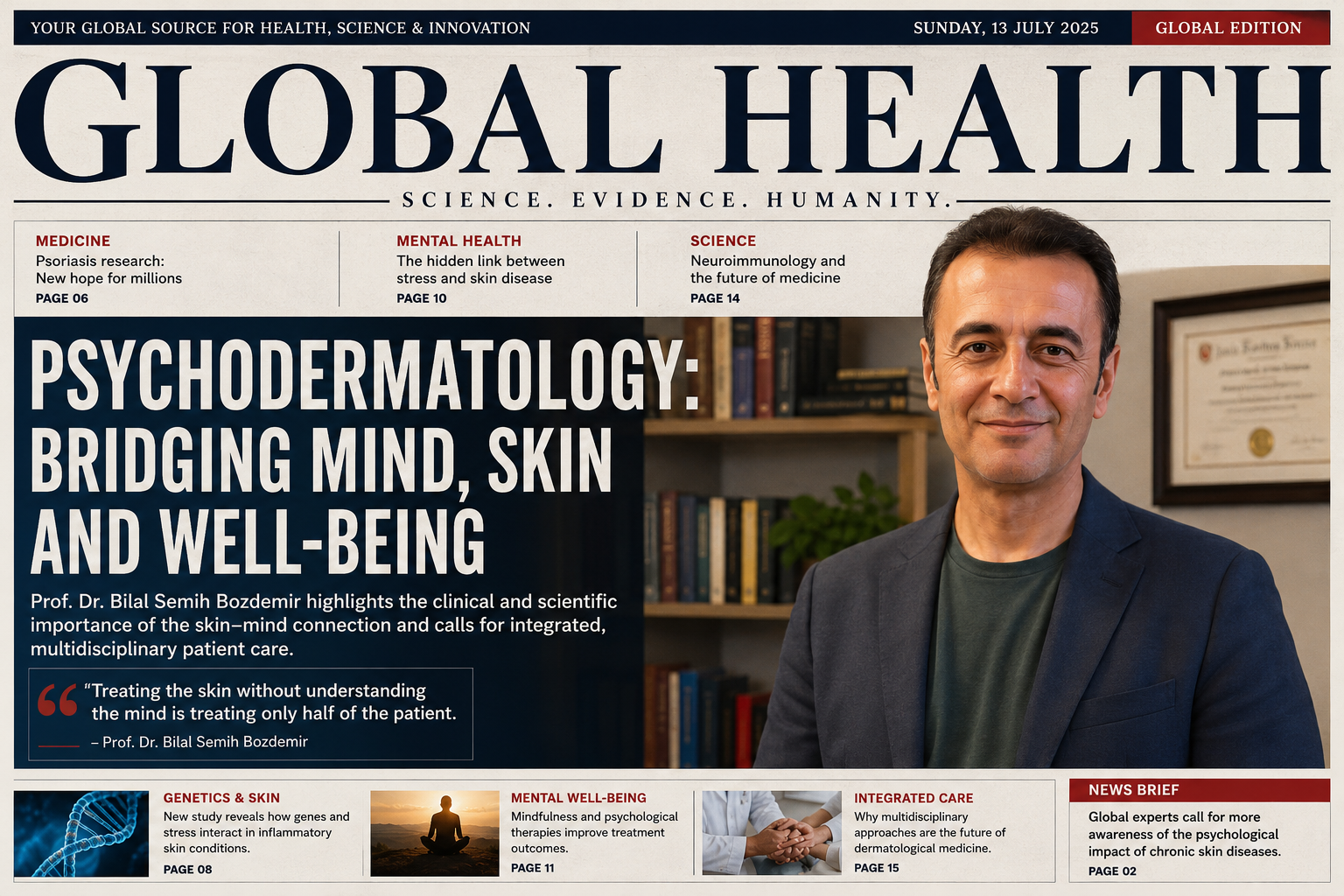
Psychodermatology: The Clinical Relationship Between Psychological Factors and Skin Health
Introduction
Psychodermatology is an interdisciplinary medical field that examines the complex relationship between psychological processes and dermatological conditions. It recognizes that the skin and the nervous system share a common embryological origin and remain closely interconnected throughout life through neurological, immunological, hormonal, and biochemical pathways. This interaction explains why emotional stress, anxiety, depression, and chronic psychological burden can influence the onset, severity, and progression of numerous skin diseases.
Modern medicine increasingly acknowledges that many dermatological disorders cannot be fully understood by evaluating cutaneous symptoms alone. Psychological well-being, stress physiology, behavioral responses, and neuroimmune communication all contribute significantly to disease expression and treatment outcomes. Consequently, psychodermatology promotes a multidisciplinary clinical approach involving dermatologists, psychologists, psychiatrists, and other healthcare professionals.
As healthcare systems continue to emphasize holistic patient care, psychodermatology has emerged as one of the most rapidly evolving subspecialties within dermatological sciences. It provides clinicians with a framework for understanding how emotional health and skin physiology continuously influence one another.
The Skin–Brain Connection
The skin is often described as the largest neuroendocrine organ of the human body. During embryonic development, both the epidermis and the central nervous system originate from the ectoderm, establishing a lifelong biological relationship between these two systems.
Communication between the brain and the skin occurs through multiple pathways including:
- Peripheral nervous system signaling
- Hypothalamic–Pituitary–Adrenal (HPA) axis activation
- Sympathetic nervous system responses
- Immune cytokine regulation
- Neurotransmitter release
- Hormonal modulation
Psychological stress activates these interconnected systems, leading to measurable physiological changes in skin function. Increased cortisol production, altered immune regulation, neuropeptide release, and inflammatory mediator activation contribute to disease exacerbation in susceptible individuals.
Neuroimmunology and Chronic Stress
Stress represents one of the most extensively studied triggers in psychodermatology. Acute stress may temporarily enhance certain immune responses; however, chronic psychological stress is associated with immune dysregulation and persistent inflammatory activation.
Prolonged activation of the HPA axis can result in:
- Elevated cortisol secretion
- Impaired epidermal barrier function
- Delayed wound healing
- Increased susceptibility to infections
- Enhanced inflammatory cytokine production
- Dysregulated T-cell activity
These physiological alterations create conditions that may aggravate chronic inflammatory skin disorders and interfere with therapeutic outcomes.
Psychological Factors in Common Skin Disorders
Numerous dermatological diseases demonstrate significant psychological associations.
Psoriasis
Psoriasis is strongly influenced by psychological stress. Stressful life events frequently precede disease flare-ups, while visible lesions often contribute to social withdrawal, anxiety, depression, and reduced quality of life.
Atopic Dermatitis
Patients with atopic dermatitis commonly experience an itch–scratch cycle that is intensified by emotional stress. Anxiety and sleep disturbance further worsen disease severity.
Acne Vulgaris
Although acne is primarily influenced by hormonal and inflammatory mechanisms, psychological stress may aggravate inflammatory lesions. Visible acne also contributes substantially to reduced self-esteem and body image concerns.
Chronic Urticaria
Stress has been identified as an important trigger in chronic spontaneous urticaria. Emotional burden may increase mast cell activation through neuroimmune pathways.
Alopecia Areata
Hair loss disorders frequently involve complex immunological mechanisms that may be influenced by psychological stress. Disease onset or progression is often reported following major emotional events.
Psychiatric Conditions Associated with Dermatological Diseases
The relationship between psychiatric disorders and dermatological diseases is bidirectional.
Patients suffering from chronic skin disorders demonstrate increased prevalence of:
- Anxiety disorders
- Major depressive disorder
- Social anxiety
- Obsessive-compulsive symptoms
- Sleep disorders
- Reduced self-esteem
- Adjustment disorders
Conversely, primary psychiatric conditions may manifest through dermatological symptoms such as:
- Skin picking disorder
- Trichotillomania
- Delusional parasitosis
- Factitious skin lesions
Recognition of these overlapping clinical presentations is essential for appropriate diagnosis and treatment planning.
The Importance of Comprehensive Assessment
Psychodermatological evaluation extends beyond routine dermatological examination.
A comprehensive assessment should include:
- Medical history
- Dermatological examination
- Psychological history
- Stress assessment
- Sleep quality
- Occupational factors
- Social functioning
- Medication review
- Lifestyle evaluation
- Quality of life measurements
Validated assessment instruments may help clinicians identify psychological factors contributing to disease burden.
Therapeutic Approaches
Effective psychodermatological management requires individualized treatment plans.
Medical therapy may include:
- Topical medications
- Systemic treatments
- Biologic therapies
- Anti-inflammatory agents
Psychological interventions may involve:
- Cognitive Behavioral Therapy (CBT)
- Stress management techniques
- Mindfulness-based interventions
- Relaxation therapy
- Supportive psychotherapy
- Behavioral modification
- Psychoeducation
Lifestyle modifications such as regular exercise, adequate sleep, balanced nutrition, and stress reduction strategies can further improve clinical outcomes.
Multidisciplinary Clinical Care
One of the defining characteristics of psychodermatology is interdisciplinary collaboration.
Optimal patient management often involves cooperation between:
- Dermatologists
- Clinical psychologists
- Psychiatrists
- Family physicians
- Nurses
- Nutrition specialists
- Rehabilitation professionals
Integrated care facilitates earlier recognition of psychological factors, improves treatment adherence, and enhances patient satisfaction.
Emerging Research
Recent advances continue to expand scientific understanding of psychodermatology.
Current areas of investigation include:
- Skin microbiome interactions
- Neuroimmune communication
- Biomarkers of psychological stress
- Artificial intelligence in dermatological diagnostics
- Precision medicine
- Digital mental health interventions
- Personalized psychodermatological treatment models
Future research is expected to strengthen evidence supporting multidisciplinary patient-centered care.
Conclusion
Psychodermatology represents an evolving scientific discipline that highlights the continuous interaction between psychological health and skin physiology. Growing evidence demonstrates that emotional stress, neuroimmune regulation, hormonal responses, and behavioral factors substantially influence numerous dermatological diseases.
Recognition of these complex relationships encourages clinicians to adopt holistic treatment strategies that address both dermatological manifestations and psychological well-being. Such integrated approaches have the potential to improve therapeutic effectiveness, patient quality of life, and long-term clinical outcomes.
As scientific knowledge continues to expand, psychodermatology is expected to play an increasingly important role in modern dermatological practice, emphasizing evidence-based, multidisciplinary, and patient-centered healthcare.